Crassula ovata 'Minor'

Crassula ovata 'Minor'

9x9 cm
€6,00
Skip to product information
Crassula ovata 'Minor'

Crassula ovata 'Minor'

€6,00
Organic
Sustainable
Locally grown

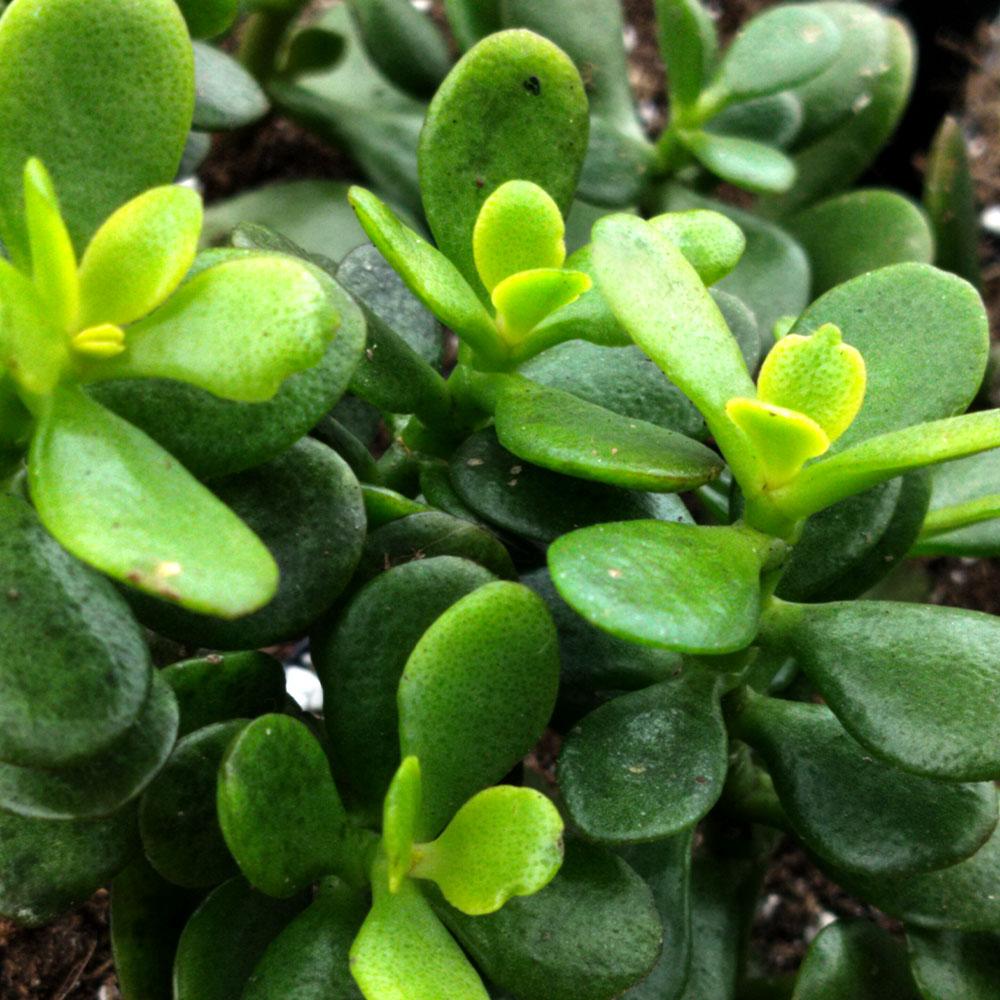
Crassula ovata 'Minor' stands out due to branched growth habit, its smaller leaves and their tendency to turn completely red when exposed to strong sunshine.


Its leaves resemble those of the classic jade plant—fleshy, glossy, and round—shifting in color from light green to deep green to vibrant red, depending on sun exposure.

The plant will bloom mid-winter (anywhere between December and February) once it has reached maturity.

The flowers are tiny , cream-colored stars on long pinkish-red stems.

It has a very slow growth rate but, once mature, it forms an elegant tree like structure with a thick trunk and branches.


Flowering January, February, December
Exposure Full Sun
Frost Tolerance -1°C to -5°C
Size 1m H x 0.6m W
Soil Sandy, Well-Draining
pda375
€6,00
5 left

🪴9x9 cm

🚂 Ships across EU
🌱 Grown in our nursery

Size
Gardening Tips
The Botany

Floral Morphology

Jade plants produce small, star-shaped flowers that are typically white or pale pink, often with a subtle sweet fragrance.

Flowers appear in dense terminal clusters during winter or early spring, although flowering is more common in mature, well-cared-for plants.

The leaves are opposite, oval to obovate, thick, and fleshy, ranging from bright green to deep green, sometimes developing a reddish tint on the margins in response to strong sunlight or cold.

Reproductive Biology

Crassula ovata reproduces both sexually via seeds and vegetatively through cuttings or offsets.

Flowers are hermaphroditic and attract pollinators such as bees and flies, but most propagation occurs through leaf or stem cuttings, which root readily under suitable conditions.

This vegetative strategy allows the plant to form dense, shrubby structures over time.

Ecology & Adaptations

Native to arid and semi-arid regions of southern Africa, Crassula ovata has evolved several adaptations for survival in dry environments:

  • Succulent leaves store water for prolonged drought periods.
  • CAM photosynthesis allows the plant to minimize water loss while maintaining metabolic activity.
  • Thick, woody stems provide structural support and enable the plant to reach up to 1–2 meters in height outdoors.

Learn more about how to care for your Crassula ovata 'Minor':

The Myth

You may also like