

Asters are classic perennial flowers known for their daisy-like blooms and vibrant colors, bringing life to the garden from late summer into autumn. They are especially valued for supporting pollinators at the end of the season when few other plants are in flower.
Easy to grow and versatile, asters thrive in borders, cottage gardens, and naturalistic plantings. In this guide, you’ll learn how to plant and care for asters, including ideal soil conditions, sunlight needs, watering, pruning, and tips to encourage abundant, long-lasting blooms.
Our Selection of Aster
At plant d'Avenir, we carry a selection of Asters that bloom continuously throughout the late Summer and into the Fall.
A full spectrum Blue selection:
|
Aster 'Blue Pompom' |
Aster 'Harrison's Blue' |
Aster 'Henri Picot' |


An all white selection:
Aster 'Snow Flurry' |
Aster 'Monte Cassino' |

Growing And Caring For Aster
- Asters generally prefer full sun, but many varieties can tolerate partial shade. The ideal growing conditions may vary slightly depending on the specific species or cultivar of Aster you are cultivating.
- These resilient perennials thrive in well-drained soil. When establishing an aster bed, it’s essential to amend the soil with organic matter to ensure good drainage. This promotes healthy growth and helps prevent potential issues such as root rot.
- Asters are known for their robust nature, and the presence of natural compounds in the plant can deter most pests. Despite their overall resilience, Asters can attract aphids, spider mites, and caterpillars so having a regular bug check is helpful to prevent a full on infestation.
- Asters benefit from consistent moisture, especially during dry periods. There are a couple of ways of achieving this:
- Watering should be done at the base of the plant to avoid wetting the foliage, reducing the risk of fungal diseases.
- Mulching around asters helps retain soil moisture, suppress weeds, and insulate the roots from temperature extremes.
- Planting them near large bushy plants or dense ground covers that retain humidity will allow for the asters to thrive (and for the area to be lush even when the asters are not in bloom)
- Regular deadheading encourages continuous blooming and maintains the plant’s overall appearance. Regular division (once every 2-3 years) will rejuvenate the plant and also bring more aster pockets to your garden!

- Chrysanthemum + Aster Mélange
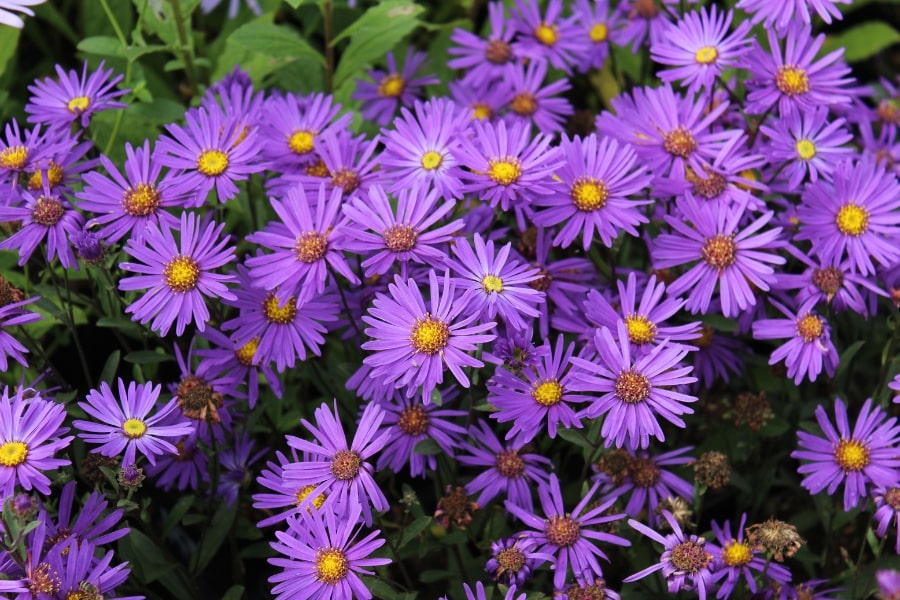
Leaves and Flowers
The foliage of Aster has lance-shaped or serrated leaves arranged alternately along the stems. The leaves may vary in color from deep green to shades of bronze, adding visual interest even when the plant is not in bloom.
The flowers of asters are the true showstoppers. They resemble classic daisies and feature a central disk surrounded by vibrant, ray-like petals. Asters bloom in a spectrum of colors, including shades of blue, purple, pink, and white. The bloom time varies depending on the species, with some flowering in late summer and others extending into the fall.
Asters are hermaphroditic, pollinated primarily by insects such as bees, butterflies, and beetles. Many species readily self-seed and can naturalize in favorable conditions. Seeds are small achenes, often with a pappus that aids in wind dispersal.
Common Uses in Gardening and Landscaping
- Perennial Borders and Mixed Beds: Asters are frequently utilized in perennial borders and mixed beds to add height, texture, and color. Their late-season blooms complement the earlier flowers in the garden, extending the visual interest well into fall. The wide range of colors allows gardeners to create harmonious or contrasting color schemes, enhancing the overall aesthetic appeal.
- Cut Flower Gardens: Asters make excellent additions to cut flower gardens, providing a fresh supply of blooms for floral arrangements. Their long stems and daisy-like flowers create charming bouquets that can bring the beauty of the garden indoors.
- Pollinator Gardens: Asters are valuable contributors to pollinator gardens, attracting bees, butterflies, and other beneficial insects. The nectar-rich flowers serve as a food source for pollinators, supporting their populations and promoting biodiversity in the garden.
Continue learning about Asters:
Frequently Asked Questions
Is Aster a Perennial?
Yes, Asters are typically perennial plants. Perennials are plants that live for more than two years, and Asters fall into this category in most temperate regions in France.
Is Aster Deer Resistant?
Asters possess a somewhat bitter taste and a strong aroma, which can make them less appealing to deer. However, while Asters are often considered deer-resistant, there are no guarantees.
Is Aster Invasive?
Aster encompasses a diverse genus with various species, some of which can indeed exhibit invasive tendencies in certain regions. While many aster species are well-behaved garden plants, they have been known to spread rapidly under favorable conditions, potentially outcompeting native flora.