Crassula ovata 'Minor'

Crassula ovata 'Minor'

9 x 9 cm
€6,00
Passer aux informations sur le produit
Crassula ovata 'Minor'

Crassula ovata 'Minor'

€6,00
Biologique
Durable
Cultivé localement

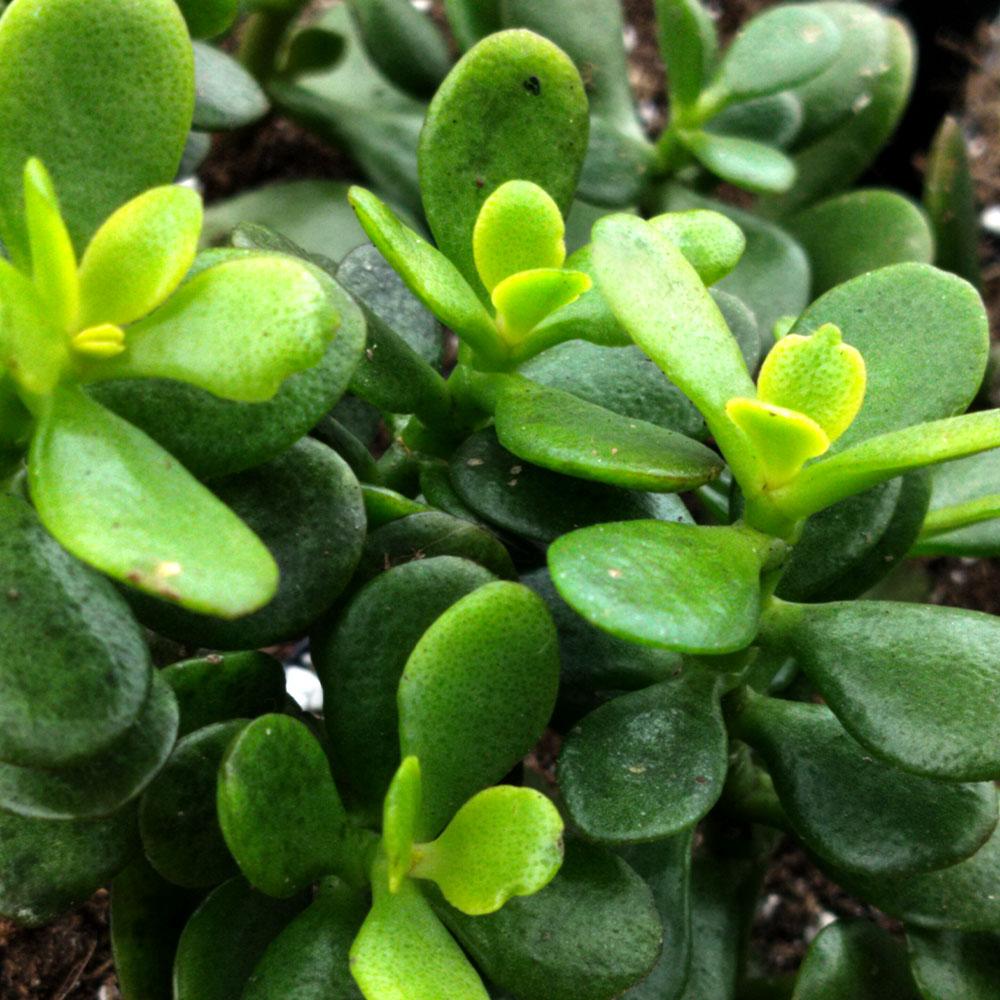
Le Crassula ovata 'Minor' se distingue par son port ramifié, ses feuilles plus petites et leur tendance à devenir complètement rouges lorsqu'elles sont exposées à un fort ensoleillement.


Ses feuilles ressemblent à celles de la plante de jade classique – charnues, brillantes et rondes – changeant de couleur du vert clair au vert foncé jusqu'au rouge vif, selon l'exposition au soleil.

La plante fleurira au milieu de l'hiver (entre décembre et février) une fois qu'elle aura atteint sa maturité.

Les fleurs sont de minuscules étoiles de couleur crème sur de longues tiges rouge-rosé.

Sa croissance est très lente mais, une fois mature, elle forme une élégante structure arborescente avec un tronc et des branches épais.


Floraison January, February, December
Exposition Full Sun
Résistance au gel -1°C to -5°C
Taille 1m H x 0.6m W
Sol Sandy, Well-Draining
pda375
€6,00
5 restant(s)

🪴9x9 cm

🚂 Expédié dans toute l'UE
🌱 Cultivé dans notre pépinière

Taille
Conseils de jardinage

La Botanique

Floral Morphology

Jade plants produce small, star-shaped flowers that are typically white or pale pink, often with a subtle sweet fragrance.

Flowers appear in dense terminal clusters during winter or early spring, although flowering is more common in mature, well-cared-for plants.

The leaves are opposite, oval to obovate, thick, and fleshy, ranging from bright green to deep green, sometimes developing a reddish tint on the margins in response to strong sunlight or cold.

Reproductive Biology

Crassula ovata reproduces both sexually via seeds and vegetatively through cuttings or offsets.

Flowers are hermaphroditic and attract pollinators such as bees and flies, but most propagation occurs through leaf or stem cuttings, which root readily under suitable conditions.

This vegetative strategy allows the plant to form dense, shrubby structures over time.

Ecology & Adaptations

Native to arid and semi-arid regions of southern Africa, Crassula ovata has evolved several adaptations for survival in dry environments:

  • Succulent leaves store water for prolonged drought periods.
  • CAM photosynthesis allows the plant to minimize water loss while maintaining metabolic activity.
  • Thick, woody stems provide structural support and enable the plant to reach up to 1–2 meters in height outdoors.

Learn more about how to care for your Crassula ovata 'Minor':

Le Mythe

Vous aimerez peut-être aussi